

loader image
  • +91 475 222 4629 / +91 8593053989
  • info@strudco.com

We are Registered and Approved With Gulf Countries

Architectural BIM design company in Dubai providing BIM services in UAE with structural engineering consultants

Steel vs. RCC: What Works Best for UAE Construction Projects?

Construction in the UAE is conducted at an extremely high rate. Construction projects can be of great size and also have an extremely short period of time for completion. One of the most important aspects to consider when constructing any project is the correct selection of the structural system to be utilized in the project. In residential high-rise buildings, commercial buildings, large warehouses, and industrial structures, you will see the comparison between steel and RCC structures as a common point of reference when compared with other types of structures. Strudco, as one of the leading structural engineering consultants in UAE, uses both steel and RCC structural construction and analyzes, models, and details each depending on what the project requires, site conditions, and client requests. This blog will explain the differences between steel and RCC construction in non-technical terms so that you can better understand which type of structure would be most applicable for projects located in the UAE.

Steel is widely used in industrial buildings, storage warehouses, factories, bridges, and skyscrapers. Steel is strong, elastic, and lighter compared to concrete. Steel has a high strength-to-weight ratio; therefore, it can support larger spans and open areas with fewer columns. Speed is one of the major advantages of steel construction in the UAE. Commercial production of steel/steelworks in a clean, controlled factory environment produces accurate prefabricated parts for the entire structure for quicker assembly on-site, thus effectively reducing your construction time. For projects where time is critical, steel is an ideal material for many building types.

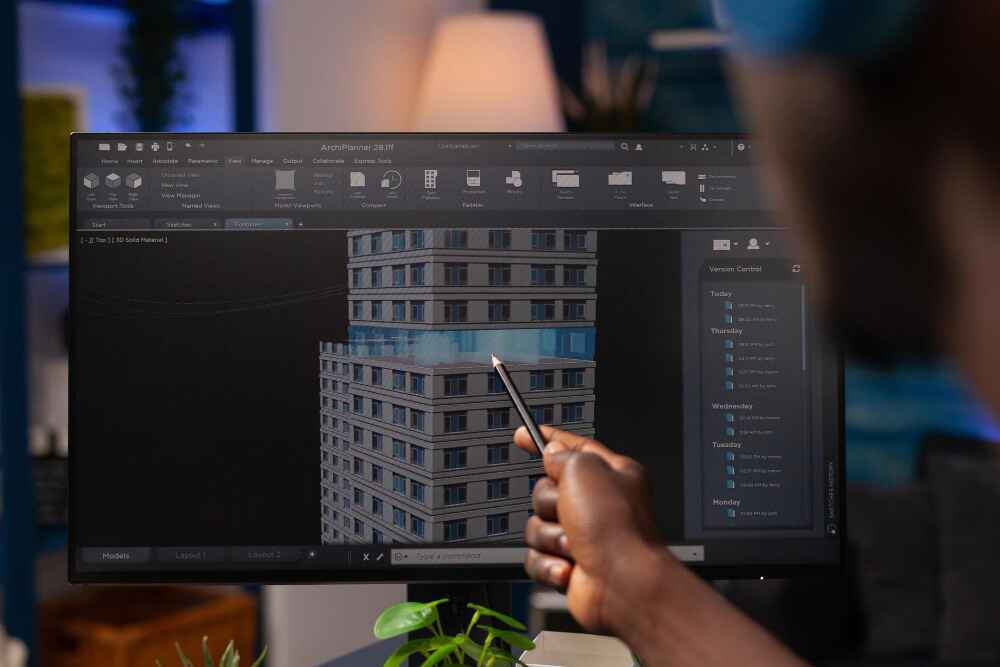
Steel structures have the ability to withstand dynamic loads like wind. Particularly in the UAE, with its many high-rise structures being subjected to the intense wind forces experienced there, steel is sufficiently elastic to accommodate these forces while withstanding failure. But steel requires adequate protection against fire and corrosion. The UAE, being a coastal region, is prone to corrosion if adequate protection is not given. Steel requires high accuracy in detailing and coordination. This is where digital modeling assists. Most architectural BIM design companies in Dubai rely on accurate structural models to ensure that steel structures are well-coordinated to fit together seamlessly at the construction site.

Reinforced Concrete (RCC) is the most common structural material used in residential and commercial construction. RCC consists of both concrete and steel reinforcing bars, enabling the construction of strong structural components used in buildings. RCC is known for its strength and fire-resistant qualities. When exposed to harsh weather, RCC maintains structural integrity and requires less maintenance than exposed steel. The high thermal mass of RCC materials allows RCC buildings in the UAE to maintain a stable internal temperature, even in extreme heat. Both the materials used to construct RCC and experienced local contractors are readily available. In comparison to steel construction, RCC has a longer build time due to the use of formwork, the curing process, and staged construction. Also, the weight of RCC structures will require the use of larger foundations that may prove to be expensive on a site with less competent soil.

Cost is always an important consideration. Steel structures may look costlier in terms of material cost, but they can cut down the project time significantly. This means earlier occupation and faster return on investment. For commercial developers, this can be an important factor that can counterbalance the cost. RCC structures may look cheaper in terms of material cost for normal buildings. But the increased time can lead to increased labor and overheads. Moreover, changes during execution are more difficult in RCC structures than in steel structures. While rendering our services for BIM services in UAE, we assist our clients in comparing the cost of steel structures and RCC structures through modeling and quantity take-off.

Time is a valuable resource when dealing with rising urbanization, such as in Dubai and Abu Dhabi. Steel is often the best choice for the type of buildings that need to go up quickly, including pre-engineered buildings, logistics facilities, or industrial buildings with long spans. For more aesthetically appealing buildings or buildings with heavy loads, RCC is the preferred material for construction. This is also the case when constructing residential towers and hotels; both types of buildings require structurally sound floors and stability against lateral (sideways) forces. Many design professionals today are also utilizing digital coordination of their architecture and building systems (MEP) to coordinate their work. By utilizing very accurate three-dimensional (3-D) models, there is greater collaboration between architects and structural engineers. Architectural BIM design companies in Singapore have demonstrated that using accurate 3-D models reduces conflicts and speeds up decision-making. This is now becoming increasingly popular with developers in the UAE.

Durability is a major consideration in the UAE, where hot and humid conditions are common. RCC structures, if well designed and maintained, can last for a long time with minimal maintenance. Steel, if well-maintained and checked for corrosion, can last for a long time, even in a coastal region. But in both cases, if proper details are taken care of, structures can last for a long time, irrespective of the material used. At Strudco, we stress the need for correct analysis and shop drawings.

There is no easy answer. Steel is best suited for fast-track construction projects, large spans, and light structures. RCC is best suited for residential high-rise buildings, durability-based buildings, and budget-friendly projects. The best approach may vary depending on the type of project, construction timeline, soil conditions, budget, and design requirements. In some instances, a combined approach that combines steel and RCC may be the most effective. We evaluate each project before recommending a structural system. We use advanced tools, modeling, and engineering knowledge to advise our clients on the best course of action. Partnering with our BIM services in the UAE, leveraging the very best knowledge we have, we make it our utmost goal that our clients’ steps toward risk avoidance and project success are always clearly informed choices.
Read More
Structural engineers applying international design standards on Middle East infrastructure project using BIM models

How International Design Standards Shape Structural Projects in the Middle East

The Middle East occupies one of the fastest-growing construction markets across the world. The extensive range of structures being developed throughout the area requires superior quality in terms of engineering. This superior quality is achieved primarily through adherence to internationally recognized design standards. These standards govern the process of developing a structure from conception to completion, including planning, analysis, detailing, and construction of the structure; as a result, they create a safe, durable, and efficient end product. Strudco, being one of the leading architectural BIM design companies in Dubai, believes that good quality engineering is built upon globally accepted design methodologies with the incorporation of local site conditions.

International design standards are technical guidelines created by worldwide engineering associations to guarantee the safety of buildings under loads, environmental conditions, and extended usage. They specify the properties of various materials, the way forces work on them, and how to mitigate risk. The most frequently referenced standards are from the United States, Great Britain, and Europe and are generally accepted as standard throughout the Middle East. They give a similar level of quality and make it easier for engineering teams to work together globally. Structural engineering consultants in UAE use these standards to develop designs that meet both regulatory and performance standards while having a global reputation.

The construction sector in the Middle East has many distinct issues. Because of the extreme temperatures, the severe nature of the environment, the earthquake risk in some areas, and the large architectural goals, there is a need for reliable engineering.

Using international codes of practice allows engineers to:

• Design buildings that are resistant to winds and heat extremes

• Ensure that the material will last over the long term

• Provide for the safety of large-scale development projects

• Acquire approval from authorities more quickly

• Follow best construction practices in the world

By adhering to established codes of practice, engineering teams will decrease mistakes, better manage risk, and ultimately increase the overall efficiency of the project.

Every successful project relies on structural analysis, which is defined as the manner in which loads will be applied to and distributed throughout a structure. International standards defined how to calculate and apply the various types of loads—live, seismic, wind, and dead loads—to ensure structures are as strong and efficient in their use of materials as possible. If an engineer were to overdesign a building, they would be increasing costs unnecessarily, whereas if they were to under design it, they would be creating an unsafe structure. It is the international standards that provide balance between these two extremes of engineering practice. Strudco strives to ensure that every structural model is built safely and accurately and meets the requirements of each project.

Construction projects today are incredibly complex. They require the combined efforts of several disciplines working together to complete them successfully. One way that companies are able to meet this challenge is through the use of digital tools, which have a huge impact on how engineers are able to implement the various international standards required of them. Through advanced modelling methodologies, engineers are able to model real-world conditions, identify conflicts early, and work together in an efficient manner. BIM service providers in the Middle East offer a convenient avenue for engineers to create intelligent three-dimensional models of structures, which allow for the integration of all structural, architectural, and mechanical engineering disciplines into one cohesive set of coordinated models. This method of producing cumulative digitized information for projects enables project teams to visualize their compliance with international standards, reduce the need to rework earlier produced information, and maintain accuracy over time.

In the Middle East, it is typically a requirement for local authorities to modify the codes to accommodate the unique regional climate and soil type, as well as the specific building methods utilized in the region. As such, it is important for engineering teams to understand both the international standards and the local modifications made to them. Having team members who have both international experience and familiarity with local code modifications means the team has the knowledge to obtain the necessary approvals while executing the building process on-site. With our extensive international experience in multiple countries, Strudco is able to incorporate international codes while fully complying with local regulations.

International collaboration with contractors and consultants on various projects in the Middle East is commonplace, with the use of common design standards allowing for collaborative efforts towards the achievement of shared goals by the project team members. International building codes are not only established by the United States. However, many other countries around the world have adopted similar codes. Because of this, projects that require the cooperation of teams from different countries with a structural engineering consultant in Saudi Arabia must also consider the correct international building code when determining what level of workmanship is available at each stage in the process. Working together as a team with structural engineers from various countries allows projects to comply with the appropriate international building codes, enabling projects to achieve domestic development objectives.

Our international design standards act as the foundation for our engineering team’s development of reliable structural solutions by using global industry-specific standards alongside advanced technologies and local insight to deliver solutions to difficult situations on fast-track projects. Combining current technological capabilities with established standards allows us to comply with safety and maintain quality levels while providing projects with the greatest efficiency. Through the use of international design standards, we can create an infrastructure for the construction industry in the Middle East. The uniformity provided by these design standards will help provide consistency on projects, allow for safety to be maintained, and provide opportunities for creativity and innovation. The combination of the appropriate engineering experience and the right digital tools allows international design standards to become a critical component in successfully delivering construction projects.

Read More
Experienced engineering team reviewing large infrastructure project with BIM design plans

Why Experienced Engineering Teams Are Crucial for Large Infrastructure Projects

Infrastructure projects influence the development of large-scale geographies and the interactions between multiple stakeholders that bring that infrastructure into existence. The development of infrastructure is an inherently complex process that requires multiple parties to work closely together to achieve the finished product. The complexity of this development gives rise to numerous inherent issues related to time, safety, and quality. Therefore, it is crucial that experienced engineering teams be involved in leading the development of major infrastructure projects. Engineering teams with experience managing large-scale infrastructure projects will be best equipped to preemptively identify issues and provide solutions in a timely manner. Because of our exposure to best practices used by architectural BIM design companies in Dubai, along with working in partnership with a number of international firms, we at Strudco are able to provide coordinated levels of quality in structural engineering services for major infrastructure projects.

The scale and complexity of large infrastructure projects are much greater than those of smaller construction developments. Large infrastructure projects entail large-scale structural systems, heavy loads, long spans, and coordination across many disciplines, including architectural, structural, facade, and MEP. Engineering teams with years of experience managing large-scale structural projects understand that a small mistake made during the design phase may result in significant safety risks and delays in construction. In addition, they will also know how to accurately define project requirements, mitigate risks early in project development, and design systems that provide both safety and buildability upon construction. We design every project from the ground up, emphasizing the balance of design intent, constructability, and long-term performance.

It’s safe to say that structural planning is central to any infrastructure project. Structural planning establishes load transfer mechanisms and explains how a structure will be able to withstand and transfer environmental loads, as well as establishing the manner in which different parts of the structure will work together to achieve optimum efficiency. Poorly planned structural designs will result in not only inefficient construction practices, which lead to wastage of materials, but also the opportunity for construction difficulties. An experienced design team will have the expertise to ensure that the structures being designed will be optimally supported by the structural systems selected without sacrificing safety; therefore, the right materials, types of framing systems, and connection details will be used in accordance with the size and location of your project. Since we are experienced facade BIM designers in Qatar, we have this knowledge at our disposal and can seamlessly incorporate structural planning into your facade design to ensure that your building’s form and function align.

Infrastructure projects carry significant financial and health and safety hazards, particularly where projects are either fast-tracked or where challenging environments create additional complications for the project. An experienced engineer will possess the knowledge and skill set to identify possible complications before they become serious issues. A well-trained structural engineer examines all facets of a project—from the manner in which foundations behave under loads (wind load, etc.), through the tolerance of the materials and installation sequencing of the materials, to the final product. Strudco leverages established workflows from global infrastructure projects as well as lessons learned to reduce uncertainties and provide reliable results. As a qualified structural design consultant in Bahrain, we have experience working within complex regulatory environments and have successfully designed structures that met both technical and code requirements without having to create multiple revisions to achieve that outcome.

Coordination remains a hurdle for almost all of our large infrastructure projects. Coordination among structural, architectural, façade systems, and MEP systems must occur without conflict; otherwise, delayed schedules may occur, and project costs will increase. Our engineering teams utilize BIM technologies along with advanced detailing methods to achieve efficient coordination. Communication of intent and information flow, along with clash detection through model coordination, improves the coordination of all projects’ contracting disciplines throughout the formal design process up until project execution. Through our multi-disciplinary engineering and productive experience, we act as central coordination partners for our clients and facilitate the seamless flow of information among all stakeholders throughout the life cycle of each project.

BIM assists with the project development of complex infrastructure projects. BIM provides the tools needed to create models of designs and detect clashes prior to construction, and it improves drawing and quantity accuracy. Although these are valuable uses of BIM technology, the only way that BIM can truly be effective is if the model is produced and managed by persons knowledgeable in BIM technology and the design processes associated with BIM technology. Our BIM Team does not view BIM merely as a modeling tool; we view BIM as a decision-making tool. Our extensive experience providing Facade BIM services in Saudi Arabia equips our team to competently manage large digital models, monitor the accuracy of data in them, and render reliable outputs to the construction teams and to all persons involved with the construction of those models. Use of this experience allows us to successfully treat BIM as what it is intended to be—a tool providing true value to the successful execution of the project, and not an unnecessary coordination burden.

Infrastructure projects rely heavily on time. Delays impact projects more than any other area, including budgets, stakeholders, and public trust. Knowledgeable engineering teams know how to manage their time effectively while maintaining the quality of the product. Engineering teams use established processes to ensure that they provide nothing but the best quality products. They utilize the latest and proven software products for the design, construction, and fabrication of the product, and will always provide documentation for the fabrication process and construction methods. Our team emphasizes accurate design and detailing and efficiently revises designs for clients to ensure that the design, detailing, and revision process is achieved as designed or planned. As we have established a working relationship with structural designers in Saudi Arabia, we are able to consistently meet tight timelines while producing a high-quality engineering product.

At Strudco, we see engineering not only as a means of providing the design and construction of a facility but also as a long-term commitment to the responsibilities of our facilities over the course of our projects. Large-scale infrastructure projects present numerous challenges; therefore, our engineering team’s experience and foresight allow us to coordinate the many technical skills needed for such endeavors more effectively than others do. We have had global exposure, BIM knowledge, and commitment to quality; therefore, we provide the best overall service for our clients in delivering complex/large-scale infrastructure projects with the utmost confidence. We believe experience is not just an advantage but rather a necessity in providing the best infrastructure that is both safe, efficient, and future-ready.

Read More
Experienced structural engineering consultant in Saudi Arabia providing innovative and reliable building solutions

The Effects of Digital Twins on Construction Efficiency

Among the most groundbreaking technologies revolutionizing how projects are implemented in the construction sector is Digital Twin technology. Through developing a virtual copy of a physical structure, engineers are able to model, track, and optimize each phase of a project before actual implementation. Strudco adopts these innovations to offer clients worldwide smarter solutions that save cost and time. Being one of the key structural design companies in Dubai, we are keen on acquainting ourselves with the digital tools that will change the construction landscape.

What Are Digital Twins in Construction?

A digital twin is a virtual replica of a physical asset, be it a structure, building, bridge, or any complex asset. The model is kept alive and updated with data, and by the use of real-time data, engineers, contractors, and clients can witness the building’s behavior under various conditions. This also allows decision-makers to detect potential issues earlier rather than later, which prevents costly rework and delays. Digital twins can also help collaboration across teams. Contractors, engineers, and architects can share a single live model, which improves internal communication and reduces design conflicts. Strudco is one of the first companies to adopt such technologies to give clients accurate and innovative solutions. We explain state-of-the-art modeling that provides outcomes that differ from those of any architectural BIM design companies in Dubai.

How Digital Twins Enhance Efficiency

Faster Planning: Teams can use predictive simulation to visualize outcomes and select the best design options at earlier stages.

Increased Optimism in Construction: Teams can always use the Digital Twin to compare with the current site progress to ensure projects stay within timelines.

Reduced Cost: Awareness of design clashes earlier lowers the time and costs associated with rework.

Improved Maintenance: Digital twins are superior performance-monitoring devices and are applicable for future upgrading purposes after construction.

With so many benefits, it is no wonder that today, a digital twin is seen to be an essential tool in the construction of modern infrastructure. In a similar spirit, as one of the trusted BIM structural companies in Dubai, we deploy spatial computing to add value in delivering projects that go above and beyond our customers’ expectations.

Why Strudco Excels in Innovation

Using Digital Twins technology allows us to not only keep up with the industry’s needs but also set industry-wide expectations to be more accurate and deliver higher-quality projects. Through the knowledge and application of the latest software, our engineers leave no option to chance and no project untouched. Our approach to digital twin technology is also aligned with the UAE’s vision for sustainable construction and smart cities. As Dubai pushes the envelope of global infrastructure, innovative firms will be the ones who shape our future. This is why we are recognized and trusted as a structural design consultant in UAE to assist our clients in realizing their ideas into effective, long-lasting, and safe buildings.

Digital twins are disrupting the construction and real estate industries with higher accuracy, reduced cost, and enhanced efficiencies. Digital twin technology optimizes all aspects of a project from design through to ongoing operation and maintenance. By using this technology, we don’t just save our clients time and resources; we enable them to realize their vision in new and innovative ways.

Read More
structural design companies in Dubai

Strudco’s Approach to High-Precision Structural Design in Dubai

Structural design requires precision in Dubai’s ever-changing environment. Strudco, being among the best structural design companies in Dubai, adopts a pioneering approach to every construction project we undertake. Having a team comprising highly experienced engineers and excellent software tools, we provide advanced modeling, detailing, and BIM solutions that fuse with international standards. We aim to produce designs that are long-lasting, innovative, and cost-effective for our clients.

Innovation Begins With Strong Foundations

For a great building, the foundation must first begin with strength, both physical and in planning, communication, and coordination. We hold special considerations for the majority of the pre-design phase, where decisions alter the entire life of a project. Our engineers work with architects and contractors to ensure that each and every design is not only capable of being constructed on-site but is also optimized in its own right. Usage of 3D BIM modeling from inception reduces risks and ensures the easy construction of a project. In order to stay ahead of design and technology developments, we make full use of the currently available computer software to simulate, visualize, and optimize every single structural element before erecting the first beam.

Merging Engineering Excellence with Technology

We know that when it comes to construction these days, one needs smart behavior and integrated digital solutions, and that is the nucleus of BIM skills. Our workforce uses Building Information Modeling to achieve structural fit and to coordinate disciplines flawlessly. Being one of the most reliable architectural BIM design companies in Dubai, we assist architects, contractors, and developers in creating a 3D visualization for every aspect of the building before the actual construction.

International Standards with Local Expertise

The construction sector in Dubai is dynamic, fast-paced, and very strictly regulated. Having gained vast experience on national and international levels, we make sure that the project is always compliant with the required codes and standards. Our skills, combined with the knowledge of global practices on one hand and local insight on the other, enable us to design buildings that are safe, functional, sustainable, and future-oriented. We provide structural design consultancy services with much reliability, utmost precision, timely delivery, and support throughout the project life. Being the most trusted structural design consultant in UAE, we combine technology with experience and employ a client-first approach when executing projects across the region.

A Customized and Collaborative Approach

Each task is treated with different strategies. Design changes are carried out by the engineering team on the basis of functionality, aesthetics, and the budget of the project. We work very closely with project stakeholders on requirements so that our design approach aligns with the targeted goal. In-house detailers, masons, and modelers create drawings with a truly very high level of accuracy, while teams confidently make decisions based on real-time coordination tools.

Engineering the Future with Clarity

Our vision is to create buildings that shape cities and span generations. With our high-precision method, driven by excellence in engineering and BIM innovation, we can meaningfully contribute to Dubai’s architectural heritage. Being among the top BIM structural companies in Dubai, we emphasize clarity and collaboration at every step. With a track record of delivery and a passion for excellence, we are shaping the construction future one project at a time. If you are looking for trusted collaborators in structural innovation, Strudco stands ready to perform on time, with perfection.

Read More