


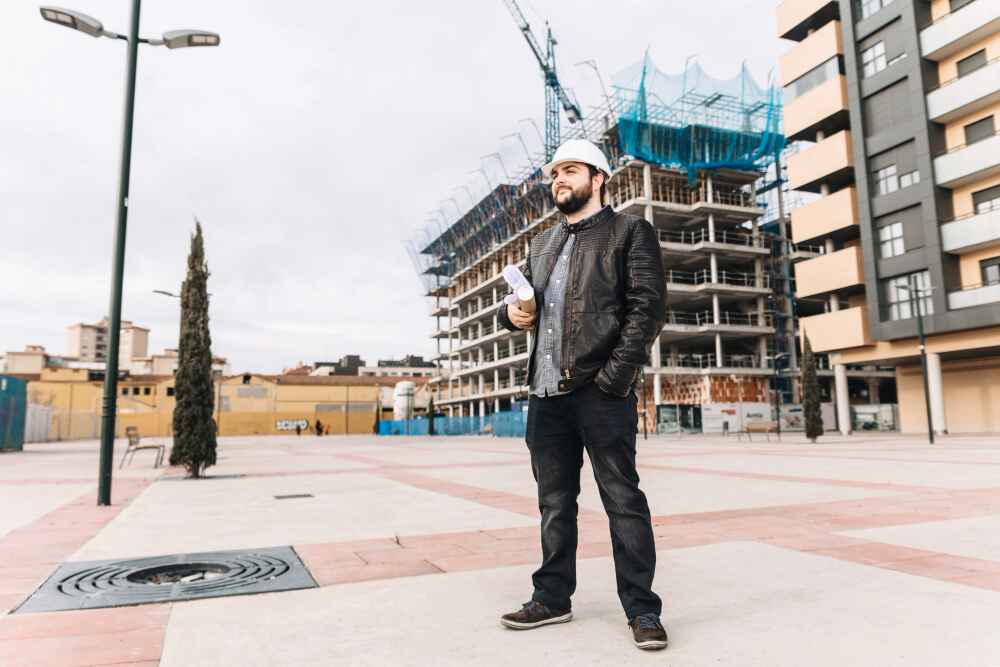
The Gulf region is known for its fast-growing urban areas, which feature modern skyscrapers and extensive building projects. The construction industry moves forward at high speed to build both tall structures and manufacturing facilities. All development projects require their team members to fulfill their duties. Buildings require both architectural beauty and structural safety to meet their design objectives. Strudco believes that seismic-resistant structural design needs to become a standard practice. Our facade BIM designers in Qatar bring extensive experience to their work because they understand how structural integrity and facade coordination require each other.
What Is Seismic-Resistant Structural Planning?
Seismic-resistant planning is the process of designing a building to withstand the effects of an earthquake. When an earthquake occurs, the ground will shake, and the building will move. A good building design will allow the building to move while withstanding the effects of the earthquake. The aim is to ensure that there are no casualties, followed by minimizing property damage. This requires a thorough understanding of the effects of forces on beams, columns, slabs, and foundations. We use structural analysis, 3D modeling, and coordination to achieve a balance between safety and performance.
Why It Matters for Modern Gulf Buildings
The Gulf region has skyscrapers, large shopping centers, airports, hospitals, and industrial facilities. These buildings support heavy loads and may have irregular shapes. Earthquake forces may act on them in various ways based on their height, design, and construction materials. Without seismic planning:
• Tall buildings may experience excessive sway.
• Joints of buildings may deteriorate.
• Façade systems may become detached.
• Repair costs may escalate.
With seismic planning:
• Buildings will be stable.
• Damage will be minimal.
• Safety for building occupants will improve.
• Maintenance costs in the long run will be lower.
As a reliable structural design consultant in Bahrain, we recognize the significance of adhering to international standards and Gulf region safety standards. It is not merely a matter of compliance. It is a matter of professional ethics.
Key Elements of Seismic-Resistant Design
1. Seismic Load Calculation
Because of the site, soil type, the height of the building, and the type of structure, engineers will evaluate the necessary seismic loads for a safe building design.
2. Efficient Structural Systems
Shear walls, braced frames, and moment-resisting frames are good ways to resist the lateral component of a seismic force. The system used depends on the type of structure.
3. High-Quality Material
Expectations for the materials used for steel or reinforced concrete structures are for them to be of high quality. The material’s strength plays a major role in how much seismic energy it can absorb.
4. Flexible but Controlled Motion
A structure should not be too rigid. Some flexibility is required to allow the structure to move during earthquakes without cracking or collapsing.
5. Secure Façade and Cladding Systems
Securing façades is necessary to maintain the integrity of the building after seismic movement. The design of any building façade will be determined based upon the building’s compliance with structural codes as well as standard processes used during construction. This means that each component of a building has to be coordinated to work together during an earthquake because all of the components are attached to provide stability and support the building itself.
3D modeling provides engineers with the ability to gain insight into how the structural elements will move with the structure. This is critical to ensuring that the façade elements will remain intact during seismic activity. This information can assist engineers with determining how to design a façade that will resist seismic forces. Additionally, BIM enables architects and engineers to model the building façades and create detailed designs from models before construction occurs, which increases collaboration between the architect, structural engineer, contractor, and client. Using a single BIM model also reduces errors and reduces scheduling delays, thereby improving on-time project delivery.
Challenges in the Gulf Construction Environment
The Gulf region has its own challenges in designing seismic-resistant structures:
• Fast-track project schedules
• Complex architectural designs
• High-rise structures
• Soil conditions in coastal areas
• Extreme temperature variations
Fast-track project schedules may require designers to work under tight schedules. However, designers should not cut corners in the design phase. The design phase can lead to costly corrections later on. At Strudco, we are strong believers in analysis before proceeding.
Long-Term Benefits of Seismic-Resistant Planning
Seismic-resistant planning has long-term benefits for the developer:
• Extended lifespan of the building
• Reduced repair and maintenance costs
• Improved insurance value
• Improved client confidence
• Improved reputation for the developer
In major news, safety is now directly connected to business continuity. Hospitals, airports, and office skyscrapers cannot have structural failure. It is always cheaper to prevent than to rebuild.
Integration Between Structural and Façade Systems
Modern buildings can have complex glass and aluminum façades. These façades have to move safely with the building during an earthquake. Poor design of façades can lead to cracking, separation, or failure of façade components. Façade designs consider the limitations of structural displacement. Façade support structures, anchors, and connections must be able to withstand displacement without becoming unstable. As structural designers in Saudi Arabia, we understand how to integrate architectural and safety considerations. Structural and façade designs must coordinate with each other. It is not a choice. It is a necessity.
We emphasize three key elements:
• Analysis before design completion
• Effective structural and façade design coordination
• Compliance with global safety standards
Our engineers employ sophisticated software to minimize the time required for design without compromising accuracy. We look forward to handling complex projects and difficult structural designs. Each project gets the attention it deserves, whether it is a high-rise building, an industrial project, or an infrastructure project. We firmly believe that seismic-resistant planning is no special feature. It is a basic necessity of good engineering.
Conclusion
The Gulf states are undergoing their fastest development in history. The requirement to construct safe structures stems from the development that must move ahead. The process of designing seismic-resistant structures safeguards three critical components, which are human life, financial resources, and business identity. Preparedness is required in all locations where basic seismic activity takes place. Preparing a structure for unexpected movement of the ground can be accomplished through the use of extensive analysis, BIM coordination, appropriate selection of materials, and compliance with global codes of practice. Strudco will fulfill our obligation to create safe, effective, and dependable engineering solutions in all Gulf States and throughout the world.
