

loader image
  • +91 475 222 4629 / +91 8593053989
  • info@strudco.com

We are Registered and Approved With Gulf Countries

Accurate load calculations in structural design by structural engineering consultants and designers in Saudi Arabia and Bahrain

Why Accurate Load Calculations Are Critical in Structural Design

The structural design of a building is not just expected to be sound; it is equally important to ensure that each structure can withstand all the loads that it is bound to experience over its lifetime. At Strudco, we have come to realize that the calculation of all loads is essentially the backbone of constructing safe and sound buildings. Be it a high-rise tower, an industrial setup, or a commercial hub, each and every building is required to withstand all the operational and environmental conditions, such as gravity, wind, earthquakes, temperature fluctuations, and the occupation of various operational factors. As premier facade BIM designers in Qatar, we have witnessed how a small margin of error while calculating all the loads can compromise the safety of structures to a great extent.

Every building has its own variety of loads, and without any of these, building design would not be effective. Dead loads generally refer to the weight of the building, such as beams, slabs, columns, and walls, and other components such as furniture, people, vehicles, etc., that are placed on the building. Environmental loads, on the other hand, generally refer to wind pressure, seismic activity, and sometimes snow in certain regions. However, in coastal regions or high-rise buildings, wind load can also be considered to be of critical importance. When these load calculations are not done appropriately, it may cause the building to become over-designed or under-designed. Over-designing can cause delay and raise costs, while a building that is under-designed can result in cracks, deflection, or even failure.

The structural safety of buildings depends completely on the ability to understand how external forces are transmitted throughout the buildings. The forces are transmitted from slabs to beams, from beams to columns, and then to the foundation and ground. One wrong calculation of assumed forces could affect the entire assumed load path. As structural engineers, this is why we have to critically analyze all factors to ensure that we understand how all factors interact. As a structural design consultant in Bahrain, we have handled many designs that require strict compliance with regional and international requirements. The codes define how we should calculate wind loads, earthquake intensities, and even the safety factor to ensure stable buildings. With precise calculations of all assumed loads, we can ensure better coordination among consultants to avoid conflicts during construction.

Accurate calculations of loads can also help engineers determine the exact size of beams, columns, reinforcements, or steel materials that are needed to support structures. This can prevent unnecessary material usage, such as steel or concrete, while still preserving maximum integrity. In large-scale commercial or business-related projects, eliminating even a small quantity of material can result in huge savings. However, it is only possible if proper data is collected and considered to be accurate. Otherwise, it can lead to the drafting of structures that may cause unnecessary expenditures. In many projects, such as those involving facades, proper calculations are crucial, as they help engineers utilize maximum benefits without sacrificing any potential characteristics. Through our façade BIM services in Saudi Arabia, it is possible to ensure that proper loads, such as wind pressure, dead loads, or connection loads, are accurately coordinated in relation to the main structure.

Modern structural designs incorporate computer models and simulations to ensure an understanding of how such structures will perform under different loads. Previously, engineers would only perform calculations to determine the performance of their structures. However, modern engineers utilize computer models to examine how the stress will be distributed in the respective structures and to ensure that there is no deflection or instability. When structural designs go wrong, they often do so as a result of errors in structural designs or incorrect assumptions. Through detailed analysis, engineering teams ensure minimal legal implications and the protection of clients against future consequences.

A building needs not only to be safe during its construction but also when it is used. When used for some time, the building develops fatigue, is exposed to the environment, and occupancy changes can influence its performance. The building design uses precise load calculations to determine its capacity to support future weight requirements. Therefore, commercial buildings might need extra load-bearing capacity in the future due to equipment or occupancy. If accurate load calculations were initially performed, the building will perform as required. However, if it is not the case, the building might need modification. For instance, in areas that are undergoing fast development, such as Saudi Arabia, it also has to adjust to meet the demands of quite daring architectural schemes and large spans. For us as structural designers in Saudi Arabia, we understand that while creativity is crucial, precision is also vital, and we can achieve that by accurately assessing loads.

Structural design does not operate in isolation; it has to be aligned with architectural intent, with the façade system, and with the MEP installations. Accurate load calculations present each discipline with the forces acting on the building. When these structural loads are well-defined, façade anchors, connection plates, and support brackets can be designed correctly from the very start. This coordination significantly involves BIM technology. Integration of the structural model with the façade model enables the engineer to visualize how loads are transferred across systems. This assures a reduction of clashes, reworks, and delays on site. Clear communication of data about loads also allows international teams to improve their collaboration when working across different regions.

Different countries have building codes that specify load requirements and safety factors. The application of these standards is to be applied meticulously by the engineer in order to comply with these standards. For a precise calculation of loads, it is indeed necessary to have a clear vision of the environmental conditions of the region and the nature of the soil. For instance, here at Strudco, we have to design in several countries around the world. Therefore, a clear understanding of the international codes and conditions of the region is necessary. By strictly adhering to these codes and verifying the assumptions made regarding loads, we are sure of delivering a structure that is safe and within the expected norms.

Load calculation is inarguably the backbone of any structure design, as safety, cost, and sustainability are highly dependent on accurate data. Without careful consideration of dead loads, live loads, and environmental loads, buildings cannot be expected to achieve stability. As the best structural engineering consultant in Saudi Arabia, Strudco has expertise in engineering, along with the use of technology and international code updates, which allows every design to be accurate and reliable. By considering accurate data as of utmost importance right from the very inception of design, we enable our clients to acquire safe, efficient, and sustainable buildings.

Read More
Structural engineers applying international design standards on Middle East infrastructure project using BIM models

How International Design Standards Shape Structural Projects in the Middle East

The Middle East occupies one of the fastest-growing construction markets across the world. The extensive range of structures being developed throughout the area requires superior quality in terms of engineering. This superior quality is achieved primarily through adherence to internationally recognized design standards. These standards govern the process of developing a structure from conception to completion, including planning, analysis, detailing, and construction of the structure; as a result, they create a safe, durable, and efficient end product. Strudco, being one of the leading architectural BIM design companies in Dubai, believes that good quality engineering is built upon globally accepted design methodologies with the incorporation of local site conditions.

International design standards are technical guidelines created by worldwide engineering associations to guarantee the safety of buildings under loads, environmental conditions, and extended usage. They specify the properties of various materials, the way forces work on them, and how to mitigate risk. The most frequently referenced standards are from the United States, Great Britain, and Europe and are generally accepted as standard throughout the Middle East. They give a similar level of quality and make it easier for engineering teams to work together globally. Structural engineering consultants in UAE use these standards to develop designs that meet both regulatory and performance standards while having a global reputation.

The construction sector in the Middle East has many distinct issues. Because of the extreme temperatures, the severe nature of the environment, the earthquake risk in some areas, and the large architectural goals, there is a need for reliable engineering.

Using international codes of practice allows engineers to:

• Design buildings that are resistant to winds and heat extremes

• Ensure that the material will last over the long term

• Provide for the safety of large-scale development projects

• Acquire approval from authorities more quickly

• Follow best construction practices in the world

By adhering to established codes of practice, engineering teams will decrease mistakes, better manage risk, and ultimately increase the overall efficiency of the project.

Every successful project relies on structural analysis, which is defined as the manner in which loads will be applied to and distributed throughout a structure. International standards defined how to calculate and apply the various types of loads—live, seismic, wind, and dead loads—to ensure structures are as strong and efficient in their use of materials as possible. If an engineer were to overdesign a building, they would be increasing costs unnecessarily, whereas if they were to under design it, they would be creating an unsafe structure. It is the international standards that provide balance between these two extremes of engineering practice. Strudco strives to ensure that every structural model is built safely and accurately and meets the requirements of each project.

Construction projects today are incredibly complex. They require the combined efforts of several disciplines working together to complete them successfully. One way that companies are able to meet this challenge is through the use of digital tools, which have a huge impact on how engineers are able to implement the various international standards required of them. Through advanced modelling methodologies, engineers are able to model real-world conditions, identify conflicts early, and work together in an efficient manner. BIM service providers in the Middle East offer a convenient avenue for engineers to create intelligent three-dimensional models of structures, which allow for the integration of all structural, architectural, and mechanical engineering disciplines into one cohesive set of coordinated models. This method of producing cumulative digitized information for projects enables project teams to visualize their compliance with international standards, reduce the need to rework earlier produced information, and maintain accuracy over time.

In the Middle East, it is typically a requirement for local authorities to modify the codes to accommodate the unique regional climate and soil type, as well as the specific building methods utilized in the region. As such, it is important for engineering teams to understand both the international standards and the local modifications made to them. Having team members who have both international experience and familiarity with local code modifications means the team has the knowledge to obtain the necessary approvals while executing the building process on-site. With our extensive international experience in multiple countries, Strudco is able to incorporate international codes while fully complying with local regulations.

International collaboration with contractors and consultants on various projects in the Middle East is commonplace, with the use of common design standards allowing for collaborative efforts towards the achievement of shared goals by the project team members. International building codes are not only established by the United States. However, many other countries around the world have adopted similar codes. Because of this, projects that require the cooperation of teams from different countries with a structural engineering consultant in Saudi Arabia must also consider the correct international building code when determining what level of workmanship is available at each stage in the process. Working together as a team with structural engineers from various countries allows projects to comply with the appropriate international building codes, enabling projects to achieve domestic development objectives.

Our international design standards act as the foundation for our engineering team’s development of reliable structural solutions by using global industry-specific standards alongside advanced technologies and local insight to deliver solutions to difficult situations on fast-track projects. Combining current technological capabilities with established standards allows us to comply with safety and maintain quality levels while providing projects with the greatest efficiency. Through the use of international design standards, we can create an infrastructure for the construction industry in the Middle East. The uniformity provided by these design standards will help provide consistency on projects, allow for safety to be maintained, and provide opportunities for creativity and innovation. The combination of the appropriate engineering experience and the right digital tools allows international design standards to become a critical component in successfully delivering construction projects.

Read More
Clash-free façade model of a mega project designed by structural engineers in Saudi Arabia

The Importance of Clash-Free Facade Modeling in Mega Projects

Mega construction projects are becoming increasingly complex every year. High-rise buildings, huge commercial areas, airports, malls, and mixed-use development demand perfect coordination between architecture, structure, and services. A small design clash in such projects may lead to major delays, cost overruns, and on-site confusion. That is why clash-free façade modeling has become a critical component of modern construction planning. Being one of the top facade BIM designers in Qatar, Strudco firmly believes that accurate façade modeling is not a technical process but rather a foundation for smooth execution, safety, and long-term building performance. Using advanced BIM workflows, we enable project teams to visualize, coordinate, and resolve issues much earlier than the construction can actually begin.

Clash-free façade modeling is essentially the procedure for identifying and resolving any kind of clash related to façade components, as well as other building components, during the design phase. These kinds of clashes can arise between façade systems, structural components, MEP, floor slabs, or façade anchorage details. If these issues are not addressed, these types of clashes tend to arise during site work, resulting in reworks, material waste, or delays. It is quite easy to eliminate these types of issues using BIM software for façade modeling, as all components are tested for accuracy in a centralized environment. Our experience in providing facade BIM services in Saudi Arabia and beyond has shown that clash resolution helps combat site-related issues in mega developments.

Mega projects involve several stakeholders working at the same time, including architects, structural engineers, MEP consultants, contractors, and fabricators. Each discipline works upon its set of drawings with timescales and priorities. Without the presence of a unified model, coordination gaps are simply not avoidable. Façades are also especially sensitive because they interact with nearly every part of a building. Anchors link to structure, glazing aligns with floor levels, and façade elements must make way for services and movement joints. Clash-free modeling thus ensures that all these interactions are reviewed digitally before construction work starts. This level of coordination assumes even more importance when the project participation is associated with international standards.

Building Information Modeling helps to facilitate collaboration on a common 3D space. Whereas the use of 2D spaces was limited, BIM allows for the entire digital model of the façade system and the structural and service components to be incorporated. With the use of BIM, there is automatic detection and notification of collisions. Experts can examine the collisions, make modifications to the design, and perform checks again to ensure that the model is aligned. As a structural design consultant in Bahrain, Saudi Arabia, and Qatar, we utilize building information modeling for perfect alignment of the façade connections to the structural systems.

Cost control is one of the most important benefits of clash-free facade modeling. Design clashes that are identified on the ground tend to cause expensive rework, material losses, and inefficiencies in the labor force. In a mega project, small mistakes cause massive financial setbacks. The team can steer clear of surprise setbacks in timelines and avoid last-minute changes by mitigating the issue on the conceptual level. Construction goes more seamlessly because of the accuracy of the plans, which can then permit the team to work with clarity.

Clash-free modeling also plays a great role in enhancing construction quality. Interrelated façade components facilitate the easy installation of components with minimum errors. The actual appearance of the final building is just like what the design was supposed to present. Safety is another key benefit. Poorly coordinated façade systems offer improper fixing, misalignment, or load transfer issues. BIM-based façade modeling helps engineers in validating connections, tolerances, and support systems before execution.

Modern façades are not just elements of cladding; they are complex aluminum systems with glass panels, shading devices, and performance-driven designs. These systems, while meeting the aesthetic goals, need to be designed to respond to structural loads, thermal movement, and environmental conditions. This level of detailing, particularly for high-rise and landmark projects, cannot afford to have deviation, because it directly impacts building longevity and maintenance.

Better collaboration is one of the major hidden benefits that come with clash-free modeling. The BIM models serve as a common communication platform where every stakeholder can review, comment, and coordinate on a real-time basis. Visual identification of problems and agreeing on the solutions happened faster than through emails or altered drawings that consumed time for the teams to communicate and solve the matters. This transparency builds trust and improves decision-making right from the start to the end of a project. As structural designers in Saudi Arabia, we closely work with façade specialists and contractors to ensure seamless coordination from concept to construction.

We are the ones who take the engineering skill and mix it with the latest BIM works to give a good solution for the façade in mega projects. We know the international standards very well; we also know the local construction trends and the needs for the engineering of a large-scale project. We emphasize the early stages of coordination, modeling, or continuous monitoring to ensure that façades work seamlessly with the structure and MEP systems. Our expertise in large projects enables us to identify problem areas beforehand to overcome them accordingly. We would welcome complex projects or fast-track delivery for you to achieve the benefits of speed, cost, and quality.

Clash-free façade modeling has become a crucial requirement for mega projects. In the context of cost savings, safety performance enhancement, collaborative working, and quality performance, there are no arguments regarding the benefits and advantages of the application of façade coordination solutions using the BIM method, and our team at Strudco always strives to achieve innovative and reliable engineering solutions with an utmost contribution to the success of projects across the planet.

Read More
structural design companies in Dubai

Strudco: A Leader Among BIM Structural Companies in Dubai

Building and infrastructural digitalisation must mean precision, fewer mistakes, and better collaboration. Strudco is one of the leading structural design companies in Dubai with architectural engineering supplemented with the latest Building Information Modelling or BIM technology. With the simulation, modelling, and optimisation capacity of BIM within and across an array of complex structures, the whole channel from design to execution can be efficiently facilitated with all relevant architects, contractors, and stakeholders.

As one of the most reliable architectural BIM design firms in Dubai, Strudco offers unparalleled experience in integrating BIM for structural projects. Today’s advanced buildings and structures require more than traditional CAD tools. Hence, we use next-generation software to execute work that includes smart 3D models, which provide better visualisation, better coordination, and better decision-making. Our BIM solutions develop accurate digital models that represent a building’s physical and functional characteristics that can share information that will allow concurrent collaboration between all the disciplines and maintain consistency between all teams involved, from designers and fabricators to erecting throughout the continuum from design to construction.

One of the main benefits of contracting BIM structural companies in Dubai, such as Strudco, is our capability to minimise construction errors considerably. Our BIM engineers identify and fix potential issues during the design phase, cutting on-site delays and rework at a cost. This preventive approach leads to quicker project delivery and improved structural integrity. Strudco also generates precise 2D drawings pulled from the BIM model and customised for the use of subcontractors. We include the exact details needed by fabrication, installation, and construction activities, overcoming the gap that exists between electronic design and the actual execution.

We strictly stick to globally approved codes and norms, as we are a reliable structural design consultant in UAE. These norms verify that our models are safe as well as aligned with local as well as foreign engineering practices. Our engineers have completed projects for customers all over the world, bringing extensive experience to each project. From skyscrapers to infrastructure projects, we have consistently demonstrated that innovative workflows and technical superiority are at the core of what we do.

Each building project is unique, and so are our solutions. We customise our services according to the need, from designing a steel building, an RCC structure, or an intricate aluminium façade. BIM has empowered our clients to plan effectively, identify problems at an earlier stage, and control resources. It is an asset for any financing structural engineering project. We coordinate closely with architects, MEP consultants, and project managers so that every small part of the model is suited to the requirements of the project as well as the specifications. Thus, the focus and result-driven nature of Strudco puts value at every point.

The requirement for effective structural design services in UAE is at its peak as construction projects become bigger and technically more demanding. Strudco, being at the leading edge of this change, provides BIM-friendly engineering solutions that certainly make project delivery successful. We love complexity, and we are always ready to take on challenging structural designs with confidence. If you are creating a new development in Dubai or extending your infrastructure in the UAE, Strudco commits ourselves as your partner in structural and BIM excellence.

Read More
BIM services in UAE

FIVE Ways BIM Services in UAE Are Improving Architectural Collaboration

With today’s rapid pace of the construction sector, smooth collaboration is the key to satisfying clients and deadlines for the project. Strudco believes that BIM services in UAE are transforming how architectural teams coordinate with structural engineers, MEP professionals, and contractors. We offer a complete range of services that promote efficiency, transparency, and accuracy throughout all phases of a project, combining our structural design services with our BIM services.

One of the most advantageous thing of BIM is its ability to make all project-related data into a single model. All teams can be in touch through real-time information update retrieval without the lag of conventional communication methods. In contrast to a bygone model of file-sharing, a BIM model allows almost real-time collaboration while reducing the extent of misunderstanding. We ensure that our customers benefit from a fully integrated system that makes clear various disciplines.

Architects and engineers can identify and resolve design issues in the early stages of development using advanced 3D models. It has decreased change orders, avoided costly rework, and improved the quality of the product. In fact, by working with BIM companies in UAE, we can optimize the design verification process by practicing thorough modeling and clash detection to ensure all stakeholders understand the project is in alignment before physical construction begins.

3. Effective Coordination Across Disciplines

When different teams work together on one project, coordination can be problematic. Our BIM process enables MEP engineers, architects, and structural teams to exchange models and identify potential clashes beforehand. This enhances synergy and avoids delays. Be it a commercial skyscraper or a residential complex, Strudco’s methodology coordinates every detail, curbing confusion and eradicating bottlenecks. Our synchronized models facilitate integration with both national and global standards, the same way we handle our BIM services in Saudi Arabia.

BIM allows stakeholders to view a project even before construction, allowing for better design decisions and client feedback. At Strudco, our approaches to visualization make the customers understand the structure proposed in full, improving planning and inviting even the other stakeholders. This level of visual clarity leads to faster approvals and forestalls unnecessary spending on changes in the middle of the project while raising collaboration and alignment with the customer, architect, and contractor throughout the entire situation. Unlike all practices, BIM helps ensure that everyone is looking at the same version of the truth. This consolidation eliminates misunderstandings and keeps the team together on the same goal. Our partnerships with BIM companies in Saudi Arabia also helped us solidify our ability to deliver reliable and scalable solutions.

Allowing clients to save project dollars on their projects through early detection of issues, accurate takeoffs of materials, and seamless coordination all lead to projects being less expensive and faster. Regardless of whether it is a hospital, mall, or data center, Strudco will provide you with the full project at the end of its full BIM support for the sake of keeping your project on schedule and budget. Our emphasis on innovation guarantees that we consistently deliver effective solutions while adapting to a changing industry. We took these efficiencies to our structural design services and BIM services Qatar where we will continue to have global reach for our clients without sacrificing quality.

Read More
Structural design services in UAE

Benefits of Structural Design in High-Rise Buildings

Cities worldwide have high-rise buildings as symbols of growth, efficiency, and invention. Strudco, offering structural design services and BIM services Dubai, ensures high-rise buildings meet safety, durability, and efficiency. The complexities involved in the tall building development process necessitate advanced structural engineering to ensure stability and long-term performance.

High-rise buildings usually suffer from multiple structural problems. A skyscraper must sustain very heavy loads of wind, earthquake, and gravity. New structural design systems like analysis of load distribution and reinforced core systems have been made so that even extreme forces do not disrupt but stabilize the building. Advanced technology is employed to improve resilience in high-rise projects.

In high-rise buildings, efficient structural design allows architects and engineers to maximize usable area. By optimizing column positions, floor plate arrangements, and materials, developers achieve maximum efficiency while maintaining reasonable safety. Strudco’s team looks beyond the immediate concerns of enhanced aesthetics or functionality for a more comprehensive planning of the projects.

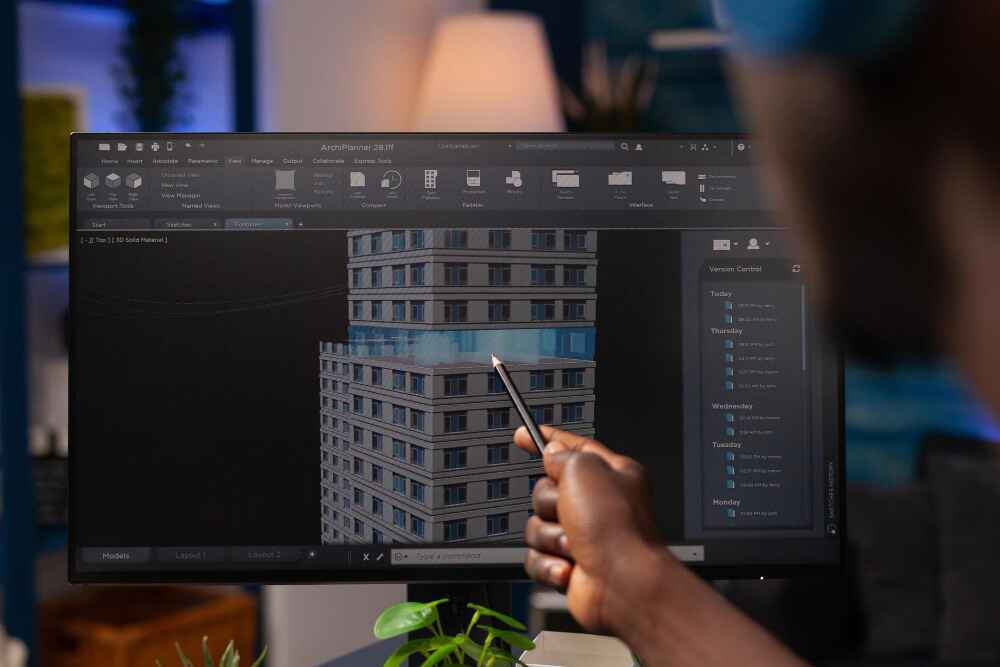
In modern times, high-rise construction is dominated by BIM. Engineers can perceive a complete view of buildings via digital models before construction takes place. Errors decrease, coordination increases and project schedules become constricted all at the same time. Our structural design services and BIM services Bahrain give us these capabilities to enhance workflows, reduce rework time, and manage overriding changes to the delivery of each whole project.

Sustainable construction techniques are becoming famous in high-rise buildings nowadays. Structural engineers are focusing on optimizing material use, aiming to reduce waste and its effects on the environment. Those modern design simulations and new materials allow the construction of high-rise buildings cost-effectively and sustainably.

High-rise buildings must be designed to withstand potential disasters such as earthquakes, hurricanes, and fire hazards. Engineers can then improve safety for occupants by incorporating features in a reinforced structural framework, seismic damping, or renderings of fire-safe materials. Strudco embraces the many innovative technologies that excite us to contribute to safety objectives in buildings that meet their high safety requirements.

By having properly planned structural designs, one can get completely away from most of the expenses in long-term maintenance. Through improved engineering techniques and the best quality material, developers can avoid costly repair and replacement due to the collapse of structures. Our experts also work toward developing cost-effective structures that not only guarantee but rather ensure longevity and sustainable savings.

With the rise of smart buildings, structural design becomes embedded with technology-based capabilities, such as IoT-based monitoring features, energy-efficient buildings, and self-automating safety systems. These technologically-based high-rise buildings provide optimal functionality, sustainability, and comfort for occupants.

At Strudco, our professionals strive to deliver structural design services and BIM services Qatar with a focus on innovation. City spaces are becoming more vertical, and we want to continue to design and build structures that will stand the test of time.

Read More